Basics
What an eSIM actually is — and what it quietly replaces
A small soldered chip, a downloaded profile, and a lot of confusing vocabulary. Here is the version worth understanding before you buy anything.
Why the first ten minutes after landing decide how smoothly your data works — a short pre-departure routine.
Sample editorial
Airport Wi-Fi, a queue at passport control, and a phone that has not yet found a network. A short, repeatable sequence makes the difference between a calm arrival and a scramble at the baggage belt.
Callnora is an independent information site. We do not sell eSIMs, take commissions, or rank providers. Nothing here is personal advice; always check your device and plan terms before you travel.
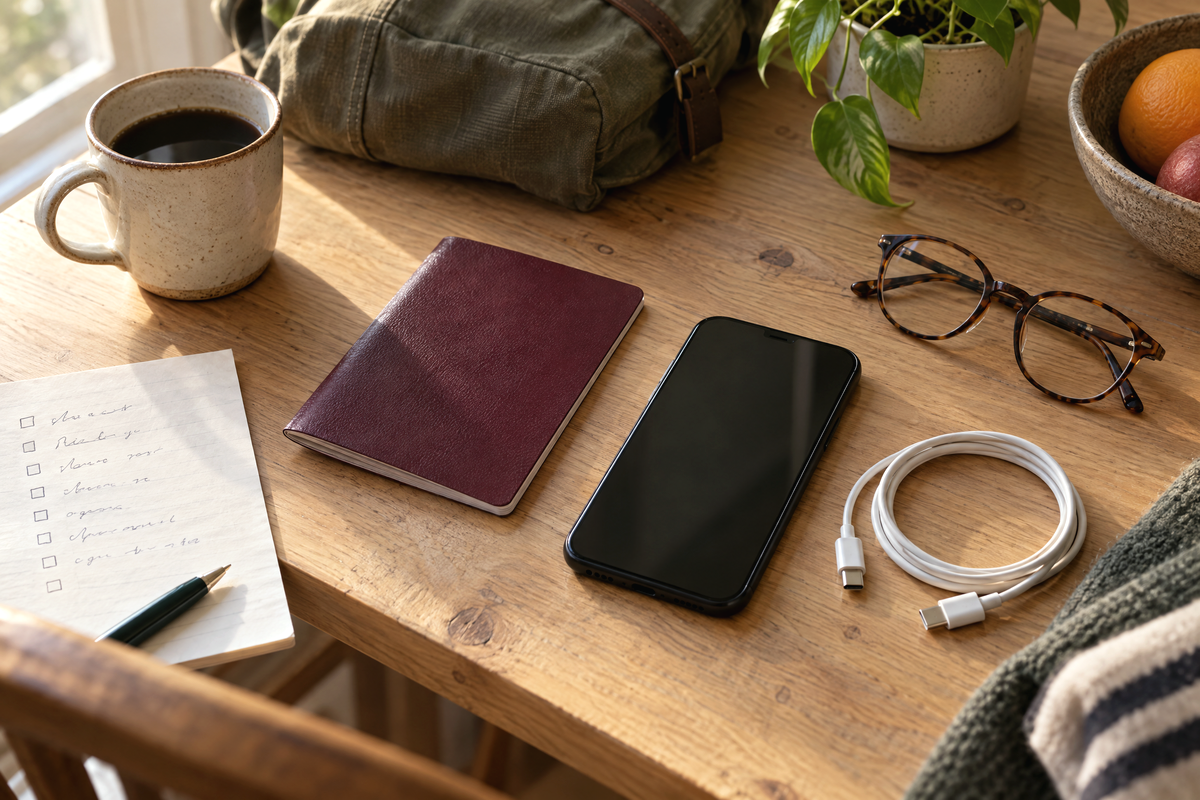
A small soldered chip, a downloaded profile, and a lot of confusing vocabulary. Here is the version worth understanding before you buy anything.
Most compatibility problems are visible before departure. A methodical check takes two minutes and saves an hour at the airport.
Installation and activation are separate steps, and the order matters more than most plan instructions admit. A short walk-through.
Maps, messages, a few photographs and the occasional video call. We break the estimate into habits rather than headline numbers.
A calm diagnostic order: coverage, line selection, data roaming, then the profile itself. Most cases resolve in the first two.
Six things worth confirming while you still have reliable Wi-Fi and time to fix them.
An eSIM cannot bypass a network lock.
Dial *#06# and keep the number somewhere other than the phone.
Installation needs a stable connection; activation can wait.
Data allowance, validity dates and the support address.
Set your primary line for calls and the travel profile for data.
A map that works without signal is the cheapest backup.
What the chip inside your phone actually does, without the acronyms.
How to confirm support before you buy a plan.
Installation, QR codes and the order of operations.
Borders, networks and coverage away from the capital cities.